|
The Château de Fontainebleau
Seine-et-Marne, France
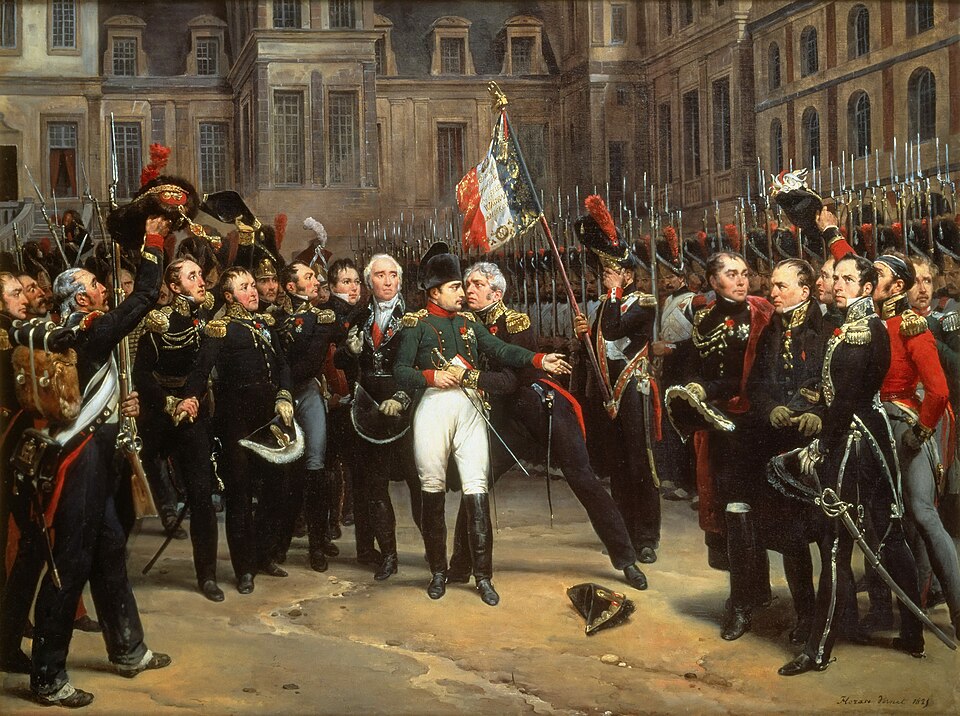
Horace Vernet, Napoleon Bids Farewell to his Imperial Guard at Fontainebleau, 1825. The scene is the Cour du Cheval Blanc, 20 April 1814. Public domain. | |
|
The château at Fontainebleau was a residence of the kings of France for rather longer than most European dynasties lasted altogether — from Louis VII in the twelfth century through to Napoleon III. It grew by accumulation rather than by plan, which is why no single style governs it and why walking through it is a lesson in eight centuries of changing taste. The decisive hand was François I, who from 1528 turned a medieval hunting seat into a Renaissance palace and brought Italian painters north to decorate it. Their work, and the workshop that grew around it, is remembered as the School of Fontainebleau. The celebrated horseshoe staircase in the forecourt is later — Jean Androuet du Cerceau, 1634. The courtyard it descends into is now called the Cour des Adieux, the Court of Farewells, after the scene in the painting above. On 20 April 1814 Napoleon took leave of his Imperial Guard there before departing for Elba. He is said to have embraced the regimental standard rather than attempt a speech. The château has been a UNESCO World Heritage Site since 1981. It holds some 1,500 rooms and sits within roughly 130 acres of park and garden, at the edge of the forest that supplied the hunting the whole place was originally built around. | |
|
This page is maintained as a personal historical note and is not affiliated with the Château de Fontainebleau or any public body. Last updated 10 October 2026. |